Academic Conference
Literature Review | Cervical Cancer Screening Guidelines (2025 Edition)
Literature sharing: Key points and clinical guidance from the Cervical Cancer Screening Guidelines (2025 Edition)
The Cervical Cancer Screening Guidelines (2025 Edition) was published in the Chinese Journal of Practical Obstetrics and Gynecology, 2025, 41(3): 332-337. DOI: 10.19538/j.fk2025030115
This guideline was developed by the Cervical Cancer Professional Committee of the China Anti-Cancer Association, organized by experts in relevant fields and combined with China's clinical practice, aiming to provide the latest recommendations for screening and standardize the implementation of cervical cancer screening.
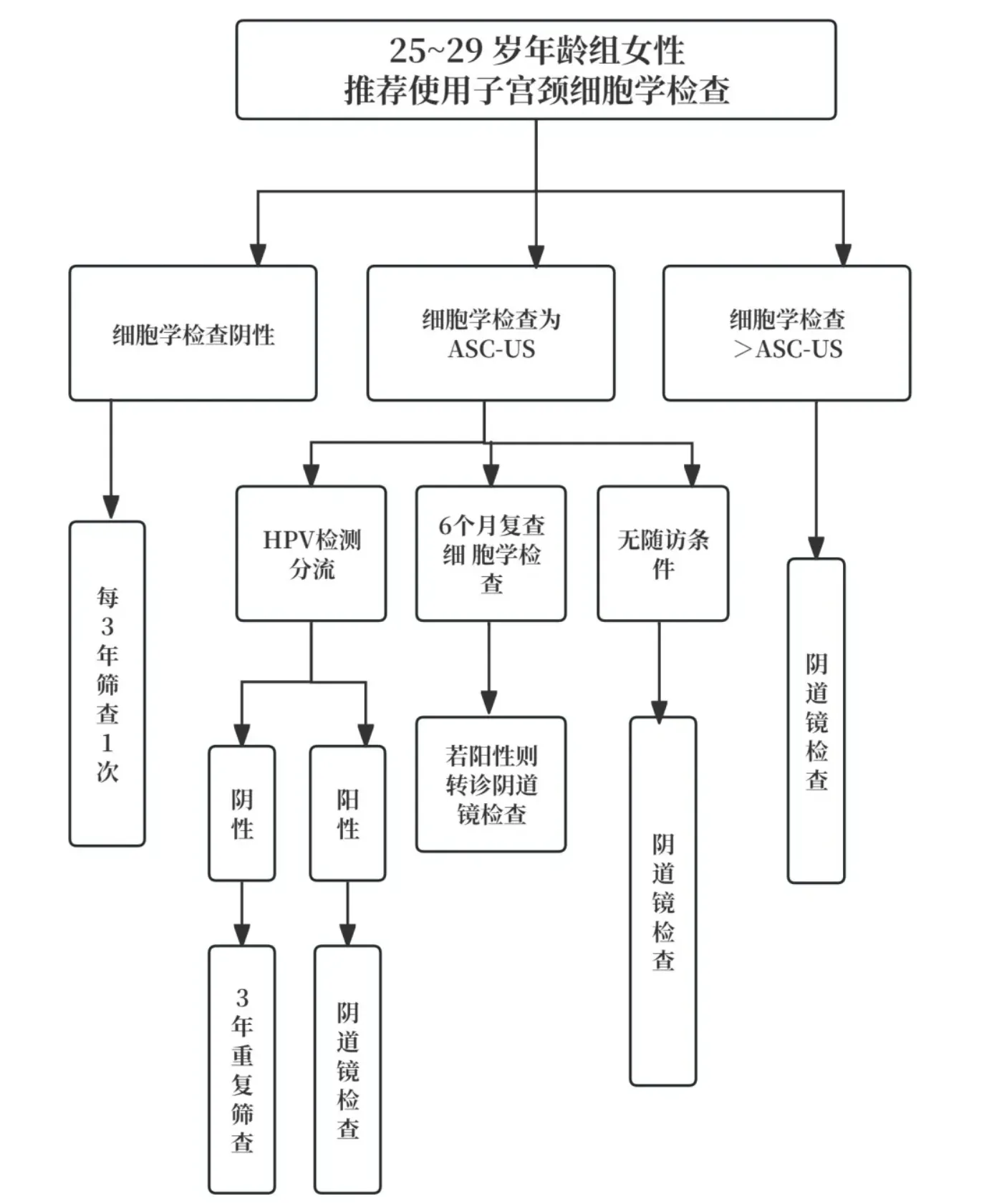
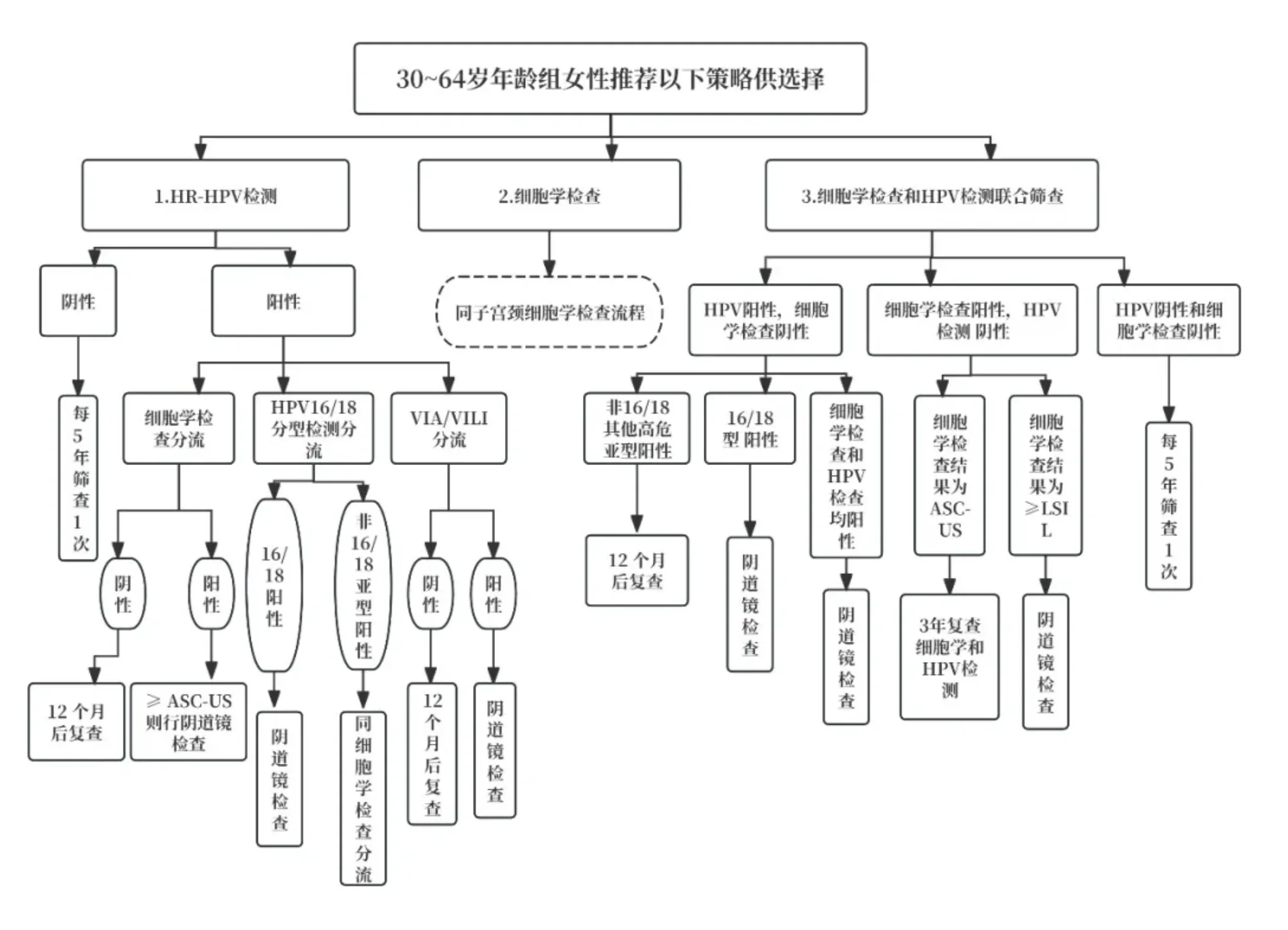
The following is a summary of cervical cancer screening methods and screening strategies.
Cervical cytology examination involves observing cervical cytological changes under a microscope, including abnormalities in nuclear morphology and structure, as well as cytoplasmic changes. Based on preparation techniques, it is divided into Pap smear cytology and liquid-based cytology (LBC) examination.
Cervical cytology examination has a specificity of >90% for cervical intraepithelial neoplasia (CIN) grade 2 and above, but a sensitivity of only 53%-81%. The accuracy for AIS is only about 50%, so cytology alone can easily lead to missed diagnosis of AIS, with an overall false-negative rate of 6.9%.
In the 2023 cervical cancer screening program recommended methods by China's National Health Commission, testing for 14 HR-HPV types (HPV16, 18, 31, 33, 35, 39, 45, 51, 52, 56, 58, 59, 66, 68) is recommended.
The advantages of HR-HPV testing include high sensitivity, good negative predictive value, less susceptibility to human interference, and easy quality control. Its disadvantage is that a positive HPV test may only indicate an HPV infection stage, not necessarily a precancerous lesion, which can easily cause psychological burden, over-diagnosis, and over-treatment for those screened. A multi-center, large-sample randomized controlled clinical study in China showed that compared with cervical cytology, HPV testing can detect more HSIL and above lesions, with a higher positive predictive value (13.8% vs. 10.9%).
Among HR-HPV positive women, compared with cytology alone, DNA ploidy analysis of cervical exfoliated cells has higher sensitivity for HSIL+ (CIN2+: 79.21% vs. 65.35%; CIN3+: 81.48% vs. 70.37%), but lower specificity (CIN2+: 85.00% vs. 96.59%; CIN3+: 84.14% vs. 93.41%). When DNA ploidy is combined with cytology, specificity can be significantly improved (CIN2+: 99.21% vs. 96.59%; CIN3+: 96.48% vs. 93.41%).
Wuhan Heer Medical Technology Development Co., Ltd.

Wuhan Heer Medical Technology Development Co., Ltd., established in 2006, is a wholly-owned subsidiary of Boai Xinkaiyuan Medical Technology Group Co., Ltd. (stock code: 300109). Heer Medical reshapes the pathology ecosystem with "digital foundation + intelligent hub." The company's AI tumor cell detection technology platform integrates imaging, analysis, and auxiliary reagents into one, providing an integrated solution that significantly improves the efficiency and accuracy of pathology diagnosis.